




by Striped Giraffe Team
23. March 2026
Reading time: 6 Minutes
Subscription Healthcare in Europe: Why Continuous Care Requires New Data Architectures
Subscription in healthcare is not simply a new business model — it requires a fundamental redesign of data architectures, system integration, and regulatory workflows.
Subscription models have transformed many digital industries.
Software moved to SaaS.
Media adopted streaming subscriptions.
E-commerce relies on recurring delivery models.
Healthcare is now exploring a similar shift.
Instead of episodic treatment, providers increasingly experiment with continuous care models built on digital platforms, connected devices, and long-term patient engagement.
At first glance, the logic seems obvious. Chronic diseases require ongoing monitoring. Preventive care benefits from continuous feedback. Telehealth enables persistent patient interaction.
Yet scaling subscription healthcare is proving far harder than expected.
The reason is simple: healthcare systems were never designed for continuous services. They were designed for episodic treatment.
This structural mismatch explains why subscription healthcare is not primarily a product innovation. It is an infrastructure transformation.
What is subscription healthcare?
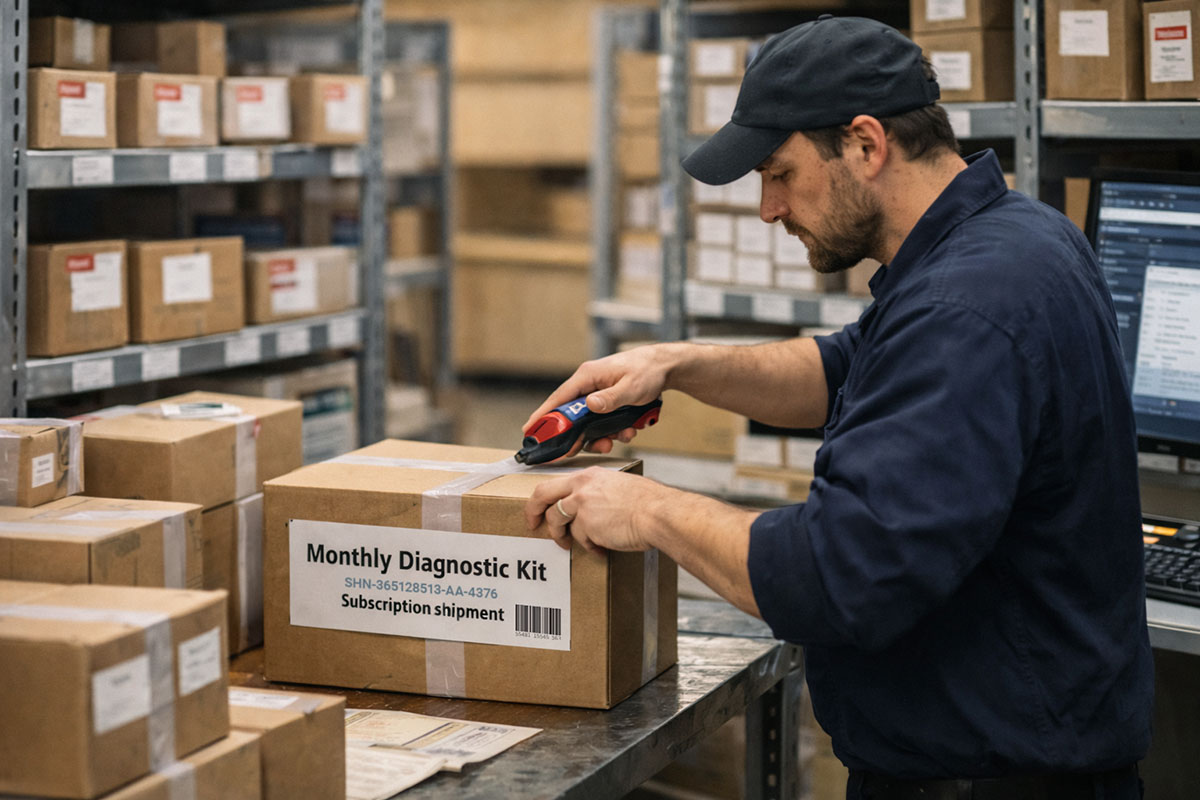
Subscription healthcare describes care models in which patients receive continuous services instead of episodic treatment.
These models combine:
- digital health platforms
- connected medical devices
- telehealth interactions
- longitudinal patient data
Instead of paying per procedure, patients or healthcare organizations pay for ongoing access, monitoring, and engagement.
Typical examples include:
- chronic disease management programs
- digital therapeutics
- preventive health subscriptions
- remote patient monitoring services
In these models, value is delivered through continuous patient interaction rather than isolated medical events.
The system architecture behind subscription healthcare
Continuous care models depend on several interconnected system layers.
Subscription healthcare platforms typically rely on four architectural components:
- Patient interaction layer
telehealth platforms, mobile health apps, patient portals - Device and monitoring layer
wearables, medical sensors, connected devices - Integration and interoperability layer
APIs, FHIR interfaces, integration platforms - Data governance layer
identity management, consent tracking, secure analytics
Without these layers working together, continuous healthcare services cannot operate reliably.
The structural tension behind subscription healthcare
Subscription businesses normally evolve through rapid iteration. Digital platforms continuously optimize their services based on user behavior and engagement data.
Healthcare operates under very different conditions.
Three structural barriers shape the evolution of subscription healthcare:
- regulation slows digital iteration
- healthcare systems remain fragmented
- continuous care requires real-time data architectures
Understanding these barriers explains why scaling digital health platforms requires more than innovative applications.

Regulation slows down digital iteration
Healthcare is one of the most tightly regulated digital environments.
In Europe, patient data falls under the General Data Protection Regulation (GDPR). Health data requires explicit consent, purpose-bound processing, and full traceability.
At the same time, digital health applications may fall under the EU Medical Device Regulation (MDR). When software supports diagnosis or therapy, even small changes can trigger validation and documentation requirements.
As a result, healthcare platforms cannot evolve as quickly as typical digital services.
Innovation must happen within controlled regulatory frameworks.
Fragmented healthcare systems limit continuous care
Even if regulatory challenges are addressed, subscription healthcare faces another structural barrier: integration.
European healthcare ecosystems remain highly fragmented.
Patient data is typically distributed across multiple systems, including:
- hospital information systems
- laboratory platforms
- insurance databases
- digital health applications
These systems rarely share consistent data models or integration standards.
Standards such as FHIR (Fast Healthcare Interoperability Resources) improve data exchange between healthcare systems. However, adoption remains uneven across organizations and countries.
Healthcare providers therefore often introduce additional integration layers, including:
- API gateways over legacy systems
- interoperability middleware
- integration platforms (iPaaS)
Without interoperability infrastructure, continuous care services remain isolated digital products rather than integrated healthcare platforms.
Continuous care requires real-time architectures
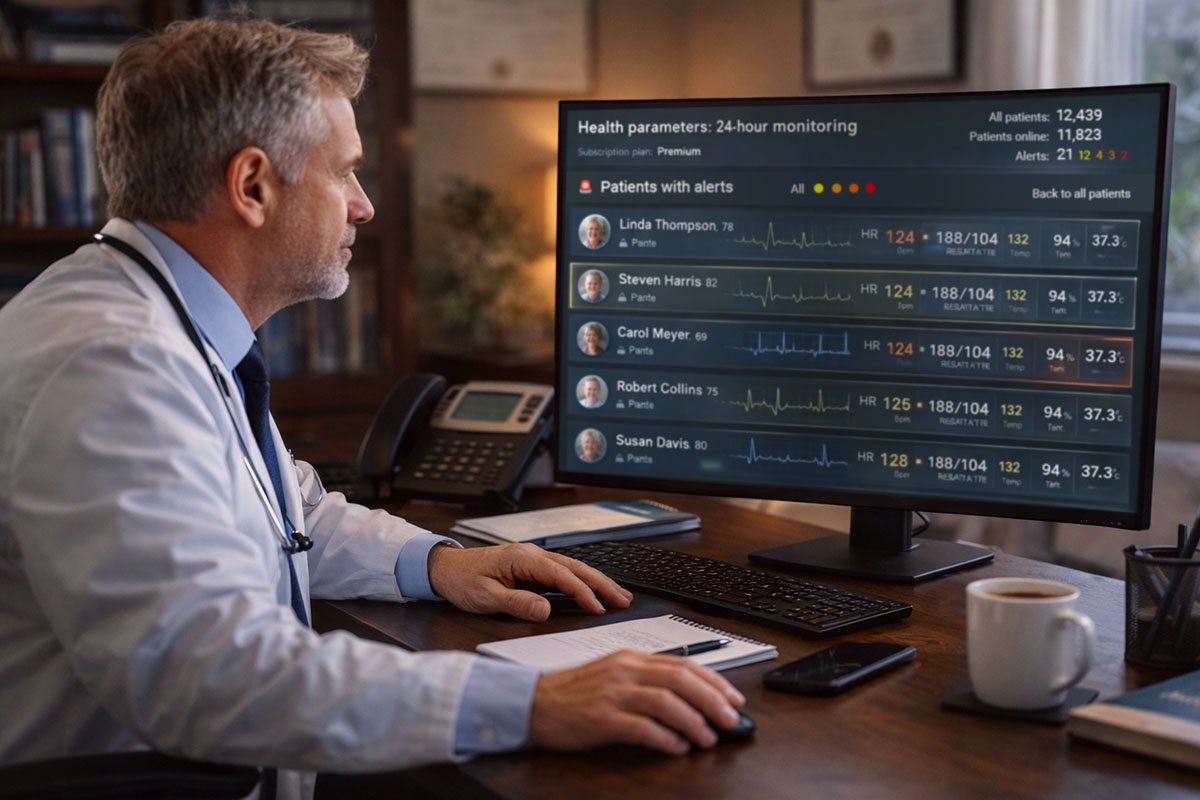
Many subscription healthcare services rely on timely patient information.
Remote monitoring systems collect continuous data streams from connected devices such as glucose sensors or cardiac monitors. These signals must often be processed in near real time.
Traditional healthcare IT systems were designed for batch processing. Continuous care requires different architectures.
Modern digital health platforms increasingly rely on:
- event-driven architectures
- streaming data pipelines
- low-latency processing environments
These technologies allow providers to detect risks earlier and respond to patient signals more quickly.
Data governance becomes the foundation of continuous care
Continuous care depends on maintaining a consistent patient context across time and systems.
Healthcare platforms must integrate data from sources such as electronic health records, laboratory results, wearable devices, and digital health applications. These datasets differ in structure, update frequency, and sensitivity.
To manage this complexity, organizations need strong governance frameworks that handle identity resolution, consent management, and traceability of clinical data.
Master Data Management (MDM) often plays a central role by linking patient identities across systems and preventing data inconsistencies.
Because healthcare data cannot be freely reused for analytics, organizations rely on pseudonymization, encryption, and strict access controls.
The result is not a single centralized database but a governed healthcare data ecosystem that supports continuous care.
Subscription healthcare is an infrastructure transformation
Subscription healthcare is an infrastructure transformation
The promise of subscription healthcare is compelling. Continuous monitoring and personalized interventions could significantly improve patient outcomes.
But delivering these models requires more than new digital services.
Healthcare organizations must redesign how their systems handle data integration, interoperability, and regulatory compliance.
Subscription healthcare is therefore less a product innovation than an infrastructure transformation.
Organizations that treat subscription services as a simple digital add-on will struggle to scale them. Those that rethink their data architectures and integration layers will define the next generation of digital healthcare platforms.
Key takeaway
Subscription healthcare works when three elements align:
- interoperable healthcare systems
- governed patient data architectures
- regulatory-aware digital platforms
Without this foundation, continuous care remains difficult to scale — no matter how promising the digital service may be.
You might also like:
- The Tech Backbone of Subscription-Based E-Commerce » Learn more
- Real-World Applications of Data Anonymization Across Industries » Learn more
- From Ownership to Use: Why Data Sharing Is the New Strategic Imperative » Learn more
- Key Drivers of Cloud Adoption in Pharma and Life Sciences » Learn more
- Pharma’s AI Readiness Index: Who Leads the Race? » Learn more